
extract
Quercetin
TL;DR
Quercetin is the most abundant dietary flavonoid, found in onions, apples, and berries. It is a potent antioxidant, senolytic, and mast cell stabilizer.
Overview
Quercetin is the most abundant dietary flavonoid, found in onions, apples, and berries. It is a potent antioxidant, senolytic, and mast cell stabilizer. Combined with dasatinib, it forms the most studied senolytic protocol. Also demonstrates significant anti-inflammatory, antihistamine, and cardiovascular benefits.
2 / 565
products in our database contain Quercetin
Source · MoodStack database
Compound forms
Quercetin comes in several molecular forms. Each absorbs and acts differently.
Quercetin Phytosome (Phospholipid Complex from Sunflower)
Quercetin-phosphatidylcholine complex (from sunflower lecithin)
Bioavailability
40%
Typical dose
—
Benefits
- Senolytic activity
- Anti-inflammatory
- Mast cell stabilization
- Cardiovascular protection
- Exercise performance
- Antiviral
Dose guide
Common dose
500-1000 mg daily (with bromelain or vitamin C for absorption)
Typical range
500–1000 mg
Based on 2 products in our database.
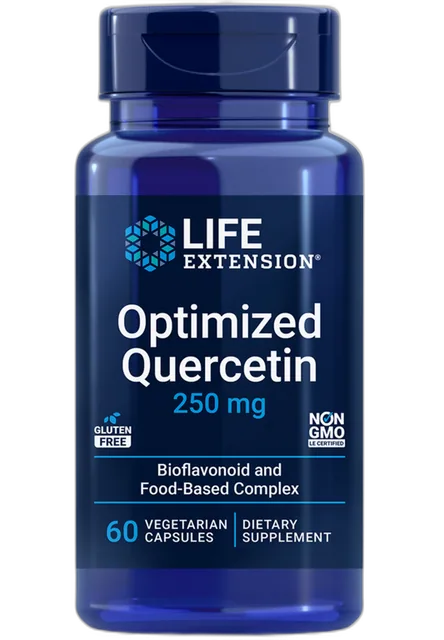
Products with Quercetin
Interactions
synergistic. Quercetin is a zinc ionophore, transporting zinc into cells where it inhibits viral RNA replication
synergistic. Vitamin C regenerates oxidized quercetin; synergistic antioxidant cycling
enhances. Bromelain increases quercetin absorption from the GI tract
synergistic. Both have senolytic and SIRT1-activating properties; synergistic longevity effects
synergistic. Both are flavonoid senolytics with complementary mechanisms for senescent cell clearance
Related categories
Top products
Medical disclaimer: This content is for informational purposes only and does not constitute medical advice. Always consult a qualified healthcare provider before starting any supplement regimen.